
Closed Cell Spray Foam Insulation in Elk Grove Village & Chicagoland
Chicagoland's Closed Cell Spray Foam Insulation Experts
Closed cell spray foam is the highest-performing insulation product available. For homeowners and building owners in the Chicago area dealing with extreme winters, humid summers, and the ongoing battle against energy loss, it is the most complete solution on the market — delivering thermal performance, air sealing, vapor control, and structural reinforcement in a single application.
Innovative Insulation Solutions has been installing closed cell spray foam throughout Elk Grove Village, Chicago, and Chicagoland for over 20 years. We have earned four SPFA National Awards for Excellence, and closed cell spray foam work has been central to that recognition. When it comes to closed cell foam in the Chicago metro area, our experience and track record are unmatched.
Request a Free Estimate
Contact Us
We will get back to you as soon as possible.
Please try again later.
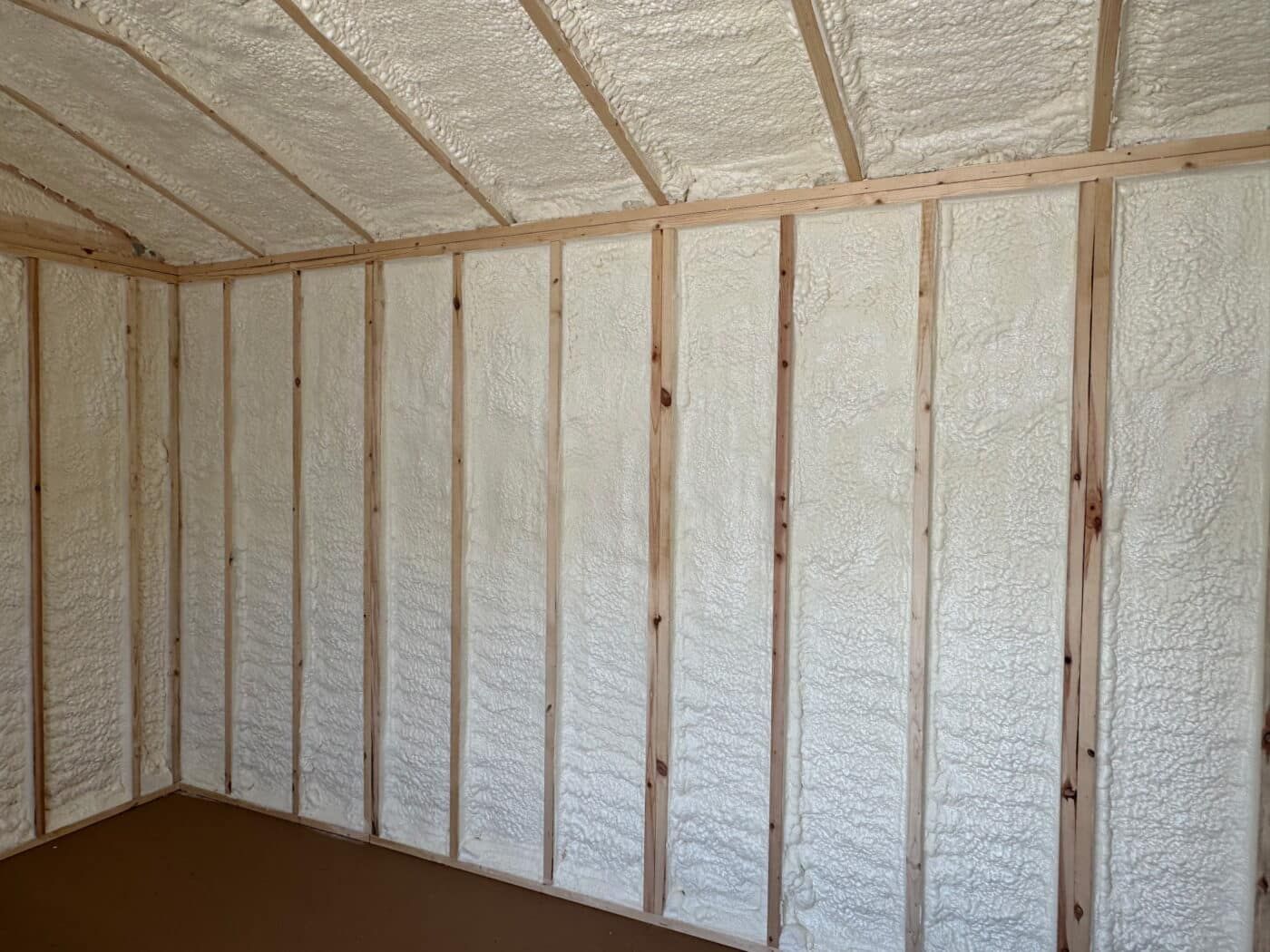
What Is Closed Cell Spray Foam Insulation?
Closed cell spray foam is a rigid, high-density polyurethane foam insulation. Unlike open cell foam, the cells within the cured material are completely closed and packed tightly together, giving closed cell foam its signature hard, solid structure. That structure is what makes it the premium choice for demanding applications and demanding climates like Chicagoland's.
When applied, closed cell foam expands to roughly 30 to 40 times its liquid volume, filling cavities and bonding aggressively to wood, concrete, metal, and masonry surfaces. It cures quickly into a rigid layer that does not sag, compress, or shift over time.
Closed cell spray foam delivers R-6.0 to R-6.5 per inch — the highest R-value of any insulation product currently available. That performance advantage means you can achieve code-required R-values in tighter spaces and thinner assemblies than any other insulation type, which matters enormously in retrofits and renovation projects throughout Chicagoland.
Critically for our climate, closed cell foam functions as both an air barrier and a Class II vapor retarder. In IECC Climate Zone 5 — where Chicago sits — controlling moisture drive through exterior wall assemblies is essential. Closed cell foam handles both in a single product, which is why it is the specification of choice for architects and builders working on high-performance buildings across the Chicago metro area.
Best Applications for Closed Cell Spray Foam in Chicagoland
Exterior Walls
Closed cell foam is the preferred insulation for exterior walls in Climate Zone 5. It achieves high R-values in standard stud cavities, eliminates air infiltration completely, and controls moisture drive through the wall assembly without requiring a separate vapor retarder. For both new construction and renovation projects across Chicagoland, it is the most thermally efficient wall insulation available.
Crawl Spaces and Rim Joists
Crawl spaces in Elk Grove Village and the northwest suburbs are constantly exposed to ground moisture, cold air infiltration, and freeze-thaw pressure. Closed cell foam applied to crawl space walls and rim joists creates a rigid, waterproof thermal barrier that protects the entire building from below. It will not absorb moisture, will not support mold growth, and performs in conditions that would compromise other insulation types.
Basement Walls and Foundation Applications
Below-grade applications require an insulation that can handle direct moisture exposure. Closed cell foam is the only spray foam product appropriate for below-grade and semi-exposed foundation wall applications in Chicagoland. It seals the wall completely and provides lasting thermal performance without the moisture vulnerability of fiberglass or rigid board alternatives.
Rooflines and Unvented Roof Assemblies
For low-slope commercial roofs, metal building rooflines, and residential applications where the insulation is applied to the underside of the roof deck, closed cell foam delivers maximum R-value per inch and eliminates the moisture accumulation issues that plague inadequately insulated roof assemblies in our climate.
Metal Buildings and Commercial Structures
Metal buildings throughout Chicagoland's industrial corridors are notorious for condensation problems, temperature extremes, and energy inefficiency. Closed cell foam applied to the interior of metal building walls and roof panels eliminates condensation at the metal surface, dramatically improves thermal performance, and reduces heating and cooling costs in a single application.
New Construction
Architects and builders across Chicagoland specify closed cell spray foam for high-performance new construction where energy efficiency, moisture management, and structural performance are all priorities. Innovative Insulation Solutions works directly with design and construction teams throughout the Chicago metro area on new residential and commercial projects.
Benefits of Closed Cell Spray Foam Insulation for Chicagoland Homes & Buildings
Highest R-value available
At R-6.0 to R-6.5 per inch, closed cell foam outperforms every other insulation product on the market. It achieves code-required R-values in less thickness than any alternative, which is critical in retrofit applications throughout Chicagoland.
Complete air and vapor control
Closed cell foam functions as both an air barrier and a Class II vapor retarder, addressing two of the most significant sources of energy loss and moisture damage in Chicago-area homes in a single product.
Waterproof and moisture-resistant
Closed cell foam will not absorb water, will not support mold growth, and maintains its R-value even in damp or wet conditions. In our climate, that durability matters.
Structural reinforcement
Closed cell foam bonds rigidly to framing and sheathing, adding meaningful strength to wall assemblies. It is the only insulation product that measurably improves the structural performance of the building it is applied to.
Condensation control on metal surfaces
For metal buildings and commercial structures throughout Chicagoland, closed cell foam eliminates the condensation that causes rust, mold, and insulation failure in unprotected metal assemblies.
May qualify for energy tax credits and utility rebates
Closed cell spray foam projects frequently qualify for federal energy efficiency tax credits under the Inflation Reduction Act, as well as rebate programs from ComEd and Nicor Gas.
Permanent performance
Closed cell foam does not sag, compress, or degrade. Properly installed, it maintains its R-value and air sealing performance for the life of the building.
Spray Foam Insulation Overview
Cathedral Ceiling Application
Basement Walls Application
Exterior Walls Application
What Our Customers Say
Closed Cell or Open Cell: Choosing the Right Spray Foam for Your Chicagoland Home
Both products are high-performing air sealers and insulation materials. The decision comes down to where the foam is being applied and what performance requirements the assembly needs to meet.
Closed cell is the right choice when maximum R-value per inch is needed, when the assembly requires a vapor retarder, when the application involves moisture exposure, or when structural reinforcement is a factor. Exterior walls, crawl spaces, basements, rim joists, and rooflines in Climate Zone 5 generally call for closed cell.
Open cell is the right choice for interior walls where sound control is the priority, large-volume attic applications where a vapor retarder is not required, and new construction cavities where cost-effectiveness on interior assemblies is a factor.
Many Chicagoland projects use both. Closed cell in the crawl space, rim joists, and exterior walls. Open cell in the attic and interior partitions. Innovative Insulation Solutions assesses your entire home and recommends the right product in the right location to deliver the best overall performance for your budget
Frequently Asked Questions About Closed Cell Spray Foam in Chicagoland
How thick does closed cell spray foam need to be in Chicago's climate zone?
For exterior walls in Climate Zone 5, building codes generally require a minimum of R-13 in wall cavities, though higher performance targets are common in new construction and renovation projects. At R-6.0 to R-6.5 per inch, closed cell foam achieves R-13 in approximately 2 inches of thickness. For unvented attic assemblies on the underside of the roof deck, R-30 or more is typically required at the roof line itself. We calculate exact specifications for your assembly during your free estimate.
Is closed cell spray foam worth the higher cost compared to other insulation types?
For the right applications, yes. Closed cell foam costs more per square foot than fiberglass, blown-in, or open cell foam. However, it delivers higher R-value per inch, eliminates the need for a separate vapor retarder, adds structural strength, and lasts the life of the building with no degradation. In crawl spaces, exterior walls, and below-grade applications in Chicagoland, it routinely outperforms less expensive alternatives over the long term.
Can closed cell spray foam be used to insulate an existing home in Chicagoland?
Yes, in areas that are accessible during renovation or targeted upgrades. Common retrofit applications include crawl spaces, rim joists, basement walls, attic roof lines, and exterior walls opened during a remodel. Our team will identify the highest-impact areas in your specific home during your free assessment.
Does closed cell spray foam prevent ice dams on Chicago area roofs?
When applied to the underside of the roof deck as part of an unvented attic assembly, yes. By keeping the roof deck at a uniform temperature and eliminating the heat loss that causes snow to melt and refreeze at the eaves, properly installed closed cell foam eliminates the conditions that create ice dams on Chicagoland homes.
How long does closed cell spray foam last?
Closed cell spray foam is a permanent installation. It bonds rigidly to the substrate and does not degrade, compress, or lose R-value over time. It is designed to last the full life of the building without replacement or maintenance.
Is closed cell spray foam safe once installed?
Yes. Once fully cured, typically within 24 hours of application, closed cell spray foam is inert and safe for building occupants. During installation our crew uses appropriate protective equipment and ensures proper ventilation. We provide clear guidance on re-occupancy timing before any work begins.
Request a Free Estimate
Contact Us
We will get back to you as soon as possible.
Please try again later.