
Spray Foam Insulation in the Chicago Metro Area
Chicagoland's Spray Foam Insulation Specialists
If you're a homeowner or business owner in the Chicago area, you already know what Illinois winters can do to a building that isn't properly insulated. Cold floors, drafty rooms, and energy bills that climb every year are all signs that your insulation isn't keeping up with our climate. Spray foam insulation is the most effective solution available, and Innovative Insulation Solutions has been installing it throughout Chicagoland for over 20 years.
Based in Elk Grove Village, Illinois, we serve homeowners, builders, and commercial clients across Chicago, the northwest suburbs, the western suburbs, Southern Wisconsin, and Northwest Indiana. Spray foam insulation is our specialty, and we've earned four SPFA National Awards for Excellence to prove it.
Request a Free Estimate
Contact Us
We will get back to you as soon as possible.
Please try again later.
What Is Spray Foam Insulation?
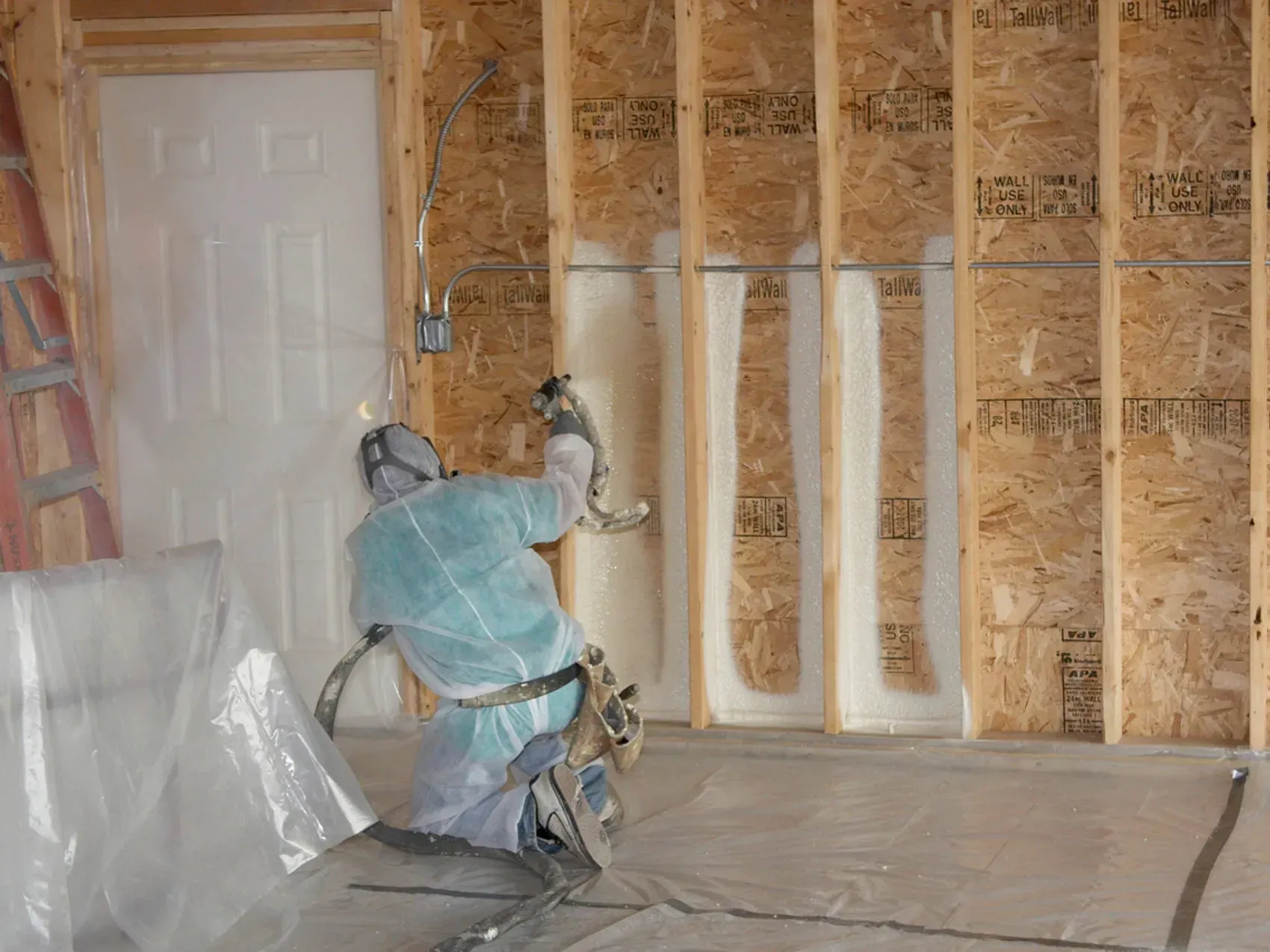
Spray foam insulation is a two-component polyurethane system mixed and applied through a hose directly onto walls, ceilings, floors, and structural cavities. Within seconds of application, the foam expands and hardens, creating a continuous, airtight barrier that bonds directly to the surface.
Unlike fiberglass batts or blown-in cellulose, spray foam doesn't just slow down heat transfer — it stops air infiltration completely. Uncontrolled air leakage accounts for up to 40% of energy loss in the average home. Spray foam eliminates that problem at the source. It also adds structural rigidity to walls and framing, providing up to a 150% improvement in racking strength, and acts as a sound barrier that significantly reduces noise from traffic, wind, and neighboring spaces.
Open Cell vs. Closed Cell Spray Foam: What's the Difference?
Innovative Insulation Solutions installs both types of spray foam. Here's what you need to know.
Closed Cell Spray Foam Insulation
Closed cell is the premium option and the most commonly specified product for Chicagoland's climate. Its dense, rigid structure delivers the highest R-value of any insulation product on the market.
R-Value: R-6.0 to R-6.5 per inch. The U.S. Department of Energy recommends R-49 to R-60 for attics in Chicago's climate zone. Closed cell foam achieves that in a fraction of the thickness of other materials.
Best for: Exterior walls, rooflines, crawl spaces, basements, rim joists, and below-grade applications.
Key benefits:
Highest R-value per inch available
Functions as both an air barrier and a vapor barrier
Water-resistant and will not absorb moisture
Adds structural strength to walls and framing
Ideal where maximum performance in minimum thickness is needed
Open Cell Spray Foam Insulation
Open cell foam has a softer, flexible structure and is an excellent air barrier, though it does not function as a vapor barrier on its own. It expands aggressively upon application, up to 100 times its liquid volume, making it ideal for filling irregular cavities and large open spaces.
R-Value: R-3.5 to R-3.8 per inch.
Best for: Interior walls, attics, cathedral ceilings, and new residential construction throughout Chicagoland.
Key benefits:
Excellent air sealing at a lower cost than closed cell
Fills every gap, crack, and irregular cavity completely
Superior sound dampening between floors and rooms
Vapor-permeable, which is preferred in certain wall assemblies
More cost-effective for large-volume applications
Benefits of Spray Foam Insulation for Chicagoland Homes & Buildings
Moisture and Mold Protection
Chicagoland's humidity and freeze-thaw cycles constantly push moisture into your home. Closed cell spray foam acts as a vapor barrier, blocking moisture before it can cause mold growth, wood rot, or structural damage.
Long-Term Performance
Spray foam does not sag, settle, or lose R-value over time the way fiberglass batts do. It bonds to the structure and stays there for the life of the building. It's a one-time investment that keeps performing for decades.
Healthier Indoor Air Quality
By sealing gaps and preventing outside air, allergens, pollen, and pollutants from entering your home, spray foam contributes to a cleaner, healthier indoor environment. A major benefit for families with allergies or respiratory sensitivities.
Noise Reduction
Spray foam fills wall cavities completely, creating a dense barrier against outside noise. For homeowners near Chicago-area roads, highways, airports, and rail lines, the difference is immediate and noticeable.
Structural Reinforcement
Closed cell spray foam bonds directly to framing and sheathing, adding rigidity and strength to your wall assembly. It's the only insulation product that actually makes your building stronger.
Qualifies for Energy Tax Credits
Many spray foam insulation projects qualify for federal energy efficiency tax credits under the Inflation Reduction Act, as well as utility rebates from ComEd and Nicor Gas. Ask us what's available for your specific project.
Lower Energy Bills
Spray foam creates a complete air seal that dramatically reduces heating and cooling costs. Chicago's winters and summers are relentless. A properly insulated home fights back. Many of our clients see a significant reduction in their monthly utility bills immediately after installation.
Why Spray Foam Makes Sense for Chicago's Climate
Chicago sits in IECC Climate Zone 5, one of the most demanding climate zones in the country. Our homes need to perform in temperatures that swing from below zero in January to 95°F in July, with high humidity throughout the summer months.
Fiberglass batt insulation loses much of its rated R-value when air moves through it, and in Chicago's wind-driven climate, that happens constantly. Spray foam creates a seamless, continuous barrier with no gaps, no seams, and nowhere for conditioned air to escape. For Chicagoland homeowners, that means warmer rooms in winter, cooler rooms in summer, and lower utility bills every month of the year.
What Our Customers Say
Frequently Asked Questions About Spray Foam Insulation
How much does spray foam insulation cost in the Chicago area?
Spray foam insulation typically costs between $1.50 and $3.50 per board foot in the Chicagoland area, depending on the type of foam, the thickness required, and the complexity of the project. Closed cell foam costs more per square foot than open cell due to its higher density and performance. While the upfront investment is higher than fiberglass or blown-in insulation, most homeowners see a strong return through reduced energy bills over time. We provide free, detailed estimates so you know exactly what to expect before any work begins.
How long does spray foam insulation last in an Illinois home?
Spray foam insulation, when properly installed, is designed to last the lifetime of the building. Unlike fiberglass batts, which can sag, settle, and lose effectiveness over 15 to 20 years, spray foam bonds directly to the structure and maintains its R-value indefinitely. It is one of the few insulation products that genuinely does not need to be replaced.
Can spray foam insulation be installed in an existing Chicagoland home?
Yes. Spray foam can be installed in existing homes during a renovation, remodel, or targeted energy upgrade. Common applications in existing homes include attics, crawl spaces, basement rim joists, and exterior walls that have been opened during a renovation. Our team will assess your home and identify the most cost-effective areas to upgrade first.
Is spray foam insulation safe for my family?
Yes, once cured. During installation, our crew uses proper personal protective equipment and ensures adequate ventilation. After closed cell spray foam fully cures, typically within 24 hours, it is inert and completely safe for occupants. It also does not contain formaldehyde and does not support mold growth, making it a healthier long-term choice for Chicagoland families.
What R-value do I need for my home in the Chicago climate zone?
Chicago is in IECC Climate Zone 5. The U.S. Department of Energy recommends R-49 to R-60 for attics, R-13 to R-21 for exterior walls, and R-19 to R-30 for floors over unconditioned spaces in this zone. Closed cell spray foam, at R-6.0 to R-6.5 per inch, can achieve these targets efficiently. Our team will calculate the exact thickness needed for each area of your home during your free assessment.
Do I need to leave my home during spray foam installation?
For most applications, we recommend that occupants and pets leave the property during installation and for approximately 24 hours afterward while the foam fully cures. Our crew will give you specific guidance based on your project size and the areas being insulated. We work efficiently and keep disruption to your schedule to a minimum.
Request a Free Estimate
Contact Us
We will get back to you as soon as possible.
Please try again later.