
Open Cell Spray Foam Insulation in Elk Grove Village & Chicagoland
Open Cell Spray Foam Insulation Specialists Serving Chicagoland
Open cell spray foam insulation is one of the most effective air sealing and insulation solutions available for Chicagoland homes and light commercial buildings. It expands aggressively on contact, fills every gap and irregular cavity completely, and creates a continuous air barrier that dramatically outperforms fiberglass batts and blown-in alternatives.
Innovative Insulation Solutions has been installing open cell spray foam throughout Elk Grove Village, Chicago, and the surrounding northwest suburbs for over 20 years. We work with homeowners, builders, and contractors across Chicagoland to identify where open cell foam makes the most sense for their specific project and budget.
Request a Free Estimate
Contact Us
We will get back to you as soon as possible.
Please try again later.
What Is Open Cell Spray Foam Insulation?
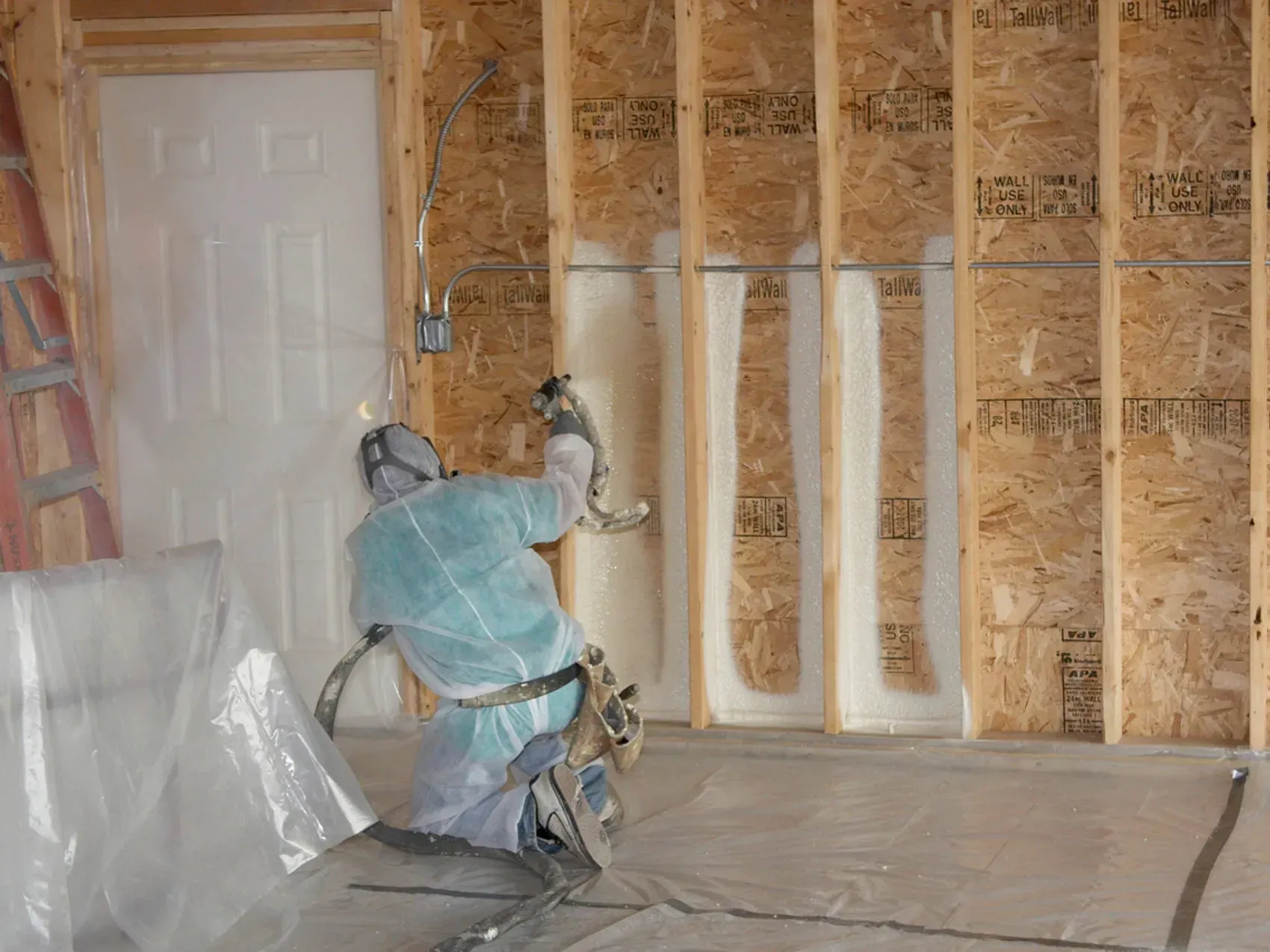
Open cell spray foam is a soft, flexible polyurethane foam insulation. Unlike closed cell foam, the cells within the material are intentionally left open during the curing process, giving it a spongy texture and allowing it to expand dramatically upon application — up to 100 times its liquid volume.
That aggressive expansion is one of open cell foam's greatest strengths. It fills attic cavities, wall bays, cathedral ceilings, and hard-to-reach spaces completely, leaving no gaps, voids, or pathways for air to move through. It bonds directly to wood, concrete, and other substrates and stays in place permanently without sagging or settling.
Open cell spray foam delivers an R-value of approximately R-3.5 to R-3.8 per inch. While lower than closed cell foam, it achieves excellent thermal performance when applied at sufficient thickness — and in the right applications, it is the more practical and cost-effective choice.
One important distinction for Chicagoland homeowners: open cell foam is vapor-permeable, meaning it does not function as a vapor barrier on its own. In certain applications, particularly exterior walls and below-grade spaces in Climate Zone 5, a separate vapor retarder may be required. Our team will advise you on the right approach for your specific project.
Best Applications for Open Cell Spray Foam in Chicagoland Homes
Attics and Roof Lines
Open cell spray foam applied to the underside of roof sheathing creates an unvented attic assembly that keeps ductwork and HVAC equipment within the conditioned envelope of the home. This is one of the most effective attic insulation strategies available for Chicagoland homes and eliminates the ice dam issues caused by heat escaping through the attic floor.
Cathedral Ceilings and Vaulted Spaces
Irregular framing cavities, tight spaces, and difficult angles make cathedral ceilings a poor candidate for batt insulation. Open cell foam fills these spaces completely in a single pass, eliminating voids and creating a continuous thermal and air barrier.
Interior Walls
Open cell foam is an excellent choice for interior walls where sound control is a priority. It fills wall cavities completely and creates a dense barrier against noise transmission between rooms and floors. A popular choice for home theaters, bedrooms, and multi-family construction throughout the Chicago area.
New Residential Construction
Open cell spray foam is widely used by Chicagoland builders for new residential construction. Its speed of application, complete cavity fill, and air sealing performance make it a highly efficient choice on new builds throughout the northwest suburbs and beyond.
Rim Joists
Rim joists are a significant source of air infiltration in older Chicagoland homes. Open cell foam applied to rim joists seals every gap quickly and cost-effectively, delivering an immediate improvement in comfort and energy performance.
Sound Insulate Wall
Sound Insulate Ceiling
Trimming Open Cell
Benefits of Open Cell Spray Foam Insulation for Chicagoland Homes
Complete air sealing
Open cell foam expands to fill every cavity, crack, and gap, creating a seamless air barrier that significantly reduces the air infiltration responsible for up to 40% of energy loss in Chicago area homes.
Superior sound dampening
The soft, open structure of this foam absorbs sound effectively, making it the best insulation choice for noise control between rooms, floors, and units in multi-family buildings throughout Chicagoland.
Reduces HVAC load
A properly air-sealed home in the Chicago climate requires less heating and cooling capacity to maintain comfortable temperatures, reducing wear on equipment and lowering monthly utility costs.
Fills irregular spaces completely
Attics, cathedral ceilings, and oddly framed cavities that are impossible to insulate effectively with batts are no problem for open cell foam.
Does not sag or settle
Unlike fiberglass batts, which compress and lose R-value over time, open cell foam bonds to the structure and maintains its performance permanently.
Lower cost than closed cell
Open cell foam costs less per square foot than closed cell, making it a smart choice for large-volume applications like attics and interior walls where a vapor barrier is not required.
May qualify for energy tax credits
Open cell spray foam insulation projects may qualify for federal energy efficiency tax credits under the Inflation Reduction Act as well as utility rebates from ComEd and Nicor Gas.
Open Cell or Closed Cell: Which Spray Foam Does Your Project Need?
Both are high-performance products. The right choice depends on where the foam is being installed and what performance goals matter most.
Choose open cell when the application is interior walls, attic roof lines, cathedral ceilings, or any large-volume space where vapor control is not the primary concern. It delivers excellent air sealing and sound control at a lower cost per square foot.
Choose closed cell when the application is exterior walls, crawl spaces, basements, rim joists in below-grade situations, or anywhere moisture control and maximum R-value per inch are the priority. Closed cell foam at R-6.0 to R-6.5 per inch also functions as a vapor barrier, which is often required in Climate Zone 5 exterior assemblies.
In many Chicagoland projects, we use both. Open cell in the attic and interior walls, closed cell in the crawl space and rim joists. Our team assesses your specific home and recommends the combination that delivers the best overall performance for your budget.
What Our Customers Say
Frequently Asked Questions About Open Cell Spray Foam in Chicagoland
Is open cell spray foam suitable for exterior walls in the Chicago climate?
Open cell foam can be used in exterior walls in Climate Zone 5, but it requires a vapor retarder on the warm side of the assembly to comply with building code requirements. Closed cell foam is often preferred for exterior walls in our climate because it functions as both an insulator and a vapor barrier in a single product. We will walk you through the right approach for your specific wall assembly during your free assessment.
How thick does open cell spray foam need to be in a Chicagoland attic?
To achieve the DOE-recommended R-49 minimum for attics in Climate Zone 5, open cell foam needs to be applied at approximately 13 to 14 inches of thickness when installed on the underside of the roof deck in an unvented attic assembly. We calculate the exact specification for your attic during your free estimate.
Does open cell spray foam help with noise from outside?
Yes, though closed cell foam provides slightly better sound isolation due to its density. Open cell foam significantly reduces noise transmission through wall and ceiling assemblies and is one of the best choices available for reducing sound between interior spaces in homes and multi-family buildings throughout Chicagoland.
How long does open cell spray foam last?
When properly installed, open cell spray foam is a permanent installation. It does not sag, compress, or degrade over time. It is designed to last the life of the building with no maintenance or replacement required.
Can open cell spray foam be installed in an existing home?
Yes, in areas that are accessible, including attics, rim joists, and crawl spaces. In existing walls, access is typically limited unless walls are already open during a renovation. Our team will identify the most impactful areas to upgrade in your specific home during your free assessment.
Request a Free Estimate
Contact Us
We will get back to you as soon as possible.
Please try again later.