
Construction Insulation Problems in Elk Grove Village & Chicagoland
Chicagoland's Construction Insulation Experts
Construction insulation problems are more common than many homeowners and builders realize throughout Elk Grove Village, Schaumburg, Arlington Heights, and the surrounding northwest suburbs. Drafts, uneven temperatures, condensation, and high energy bills often trace back to gaps in traditional insulation systems. Many buildings rely on fiberglass batts combined with separate air barriers and vapor retarders, which can leave weak points in the building envelope.
It doesn’t have to work that way. Innovative Insulation Solutions uses closed cell spray foam insulation to solve multiple construction problems in a single application. Spray foam expands to fill gaps, seals air leaks, and provides moisture control at the same time. The result is a tighter, more efficient building that performs better year-round.
Chicago’s climate makes proper insulation even more important. Freeze-thaw cycles, humidity changes, and seasonal temperature swings create conditions where poorly sealed structures lose energy and develop moisture issues. Closed cell spray foam addresses these challenges at the source.
Request a Free Estimate
Contact Us
We will get back to you as soon as possible.
Please try again later.
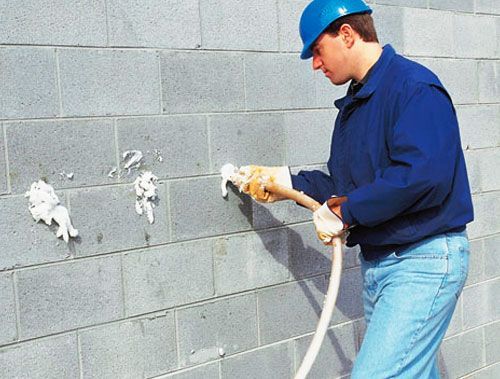
How Spray Foam Solves Construction Problems
Closed cell spray foam insulation is a high-performance material designed to provide insulation, air sealing, and vapor control in one system. The foam is applied as a liquid and expands rapidly to fill cracks, seams, and cavities. Once cured, it forms a rigid barrier that prevents air movement and reduces moisture intrusion.
Unlike fiberglass insulation, which allows air to pass through, spray foam creates a continuous seal. This eliminates drafts and helps maintain consistent indoor temperatures. The foam also adds structural strength and resists water absorption, making it ideal for Chicagoland’s changing climate.
Because everything is handled in one application, there are fewer opportunities for installation errors. This improves performance and reduces long-term maintenance concerns.
Common Areas With Insulation Issues
Exterior Walls
Air leaks through wall cavities cause heat loss and uneven temperatures. Spray foam seals the entire wall for consistent performance.
Band Joists
One of the most common leakage points in homes. Spray foam completely seals gaps and stops drafts.
Basement Walls
Moisture and temperature differences often lead to condensation. Spray foam helps control humidity and improves comfort.
Floors Over Garages
Cold floors above garages are caused by air leakage. Spray foam reduces drafts and improves insulation.
Cantilevered Floors
These exposed areas lose heat quickly. Spray foam fills voids and improves thermal performance.
Attic Roof Decks
Air movement through attic spaces reduces efficiency. Spray foam creates a sealed thermal envelope.
Why Buildings Struggle in Chicagoland
Chicagoland experiences extreme seasonal temperature changes that put stress on building materials. Cold winters push warm indoor air outward, while hot summers reverse the process. This constant pressure drives air through any gaps in the insulation system.
Moisture is another major issue. When warm, humid air enters cooler wall cavities, condensation forms. Over time, this leads to mold growth, material damage, and reduced insulation performance.
Spray foam reduces these risks by sealing air movement and controlling moisture at the source, making buildings more stable year-round.
Why Builders Choose Spray Foam for Construction Problems
Air Sealing Efficiency
Spray foam expands to seal all cracks and gaps, eliminating unwanted air movement and drafts.
Moisture Protection
Closed cell foam resists water and helps prevent condensation inside walls and ceilings.
Higher R-Value Performance
Provides strong insulation value per inch compared to traditional materials like fiberglass.
Energy Savings
Reduces heating and cooling loss by creating a tighter building envelope.
Indoor Comfort Stability
Helps maintain consistent temperatures throughout the building year-round.
Long-Term Durability
Spray foam does not settle or degrade, maintaining performance for decades.
What Our Clients Say
Frequently Asked Questions About Construction Insulation Problems in Chicagoland
Why do construction insulation problems happen even in new buildings?
Even new homes can have gaps in insulation or air sealing. Small installation errors can lead to drafts, moisture issues, and energy loss.
How does spray foam solve insulation problems better than fiberglass?
Fiberglass only slows heat transfer, while spray foam also seals air leaks and controls moisture, improving overall performance.
Where do insulation problems usually appear in homes?
Common areas include band joists, exterior walls, attics, basement walls, and floors over garages.
Does spray foam help lower energy bills?
Yes. By reducing air leakage, spray foam improves HVAC efficiency and lowers heating and cooling costs.
Is spray foam good for moisture control?
Closed cell spray foam resists moisture and helps prevent condensation inside building cavities.
Can spray foam be used in commercial buildings?
Yes. It is commonly used in warehouses, offices, and industrial buildings for energy efficiency.
How long does spray foam insulation last?
Spray foam is long-lasting and maintains its performance for decades without settling or breaking down.
Request a Free Estimate
Contact Us
We will get back to you as soon as possible.
Please try again later.